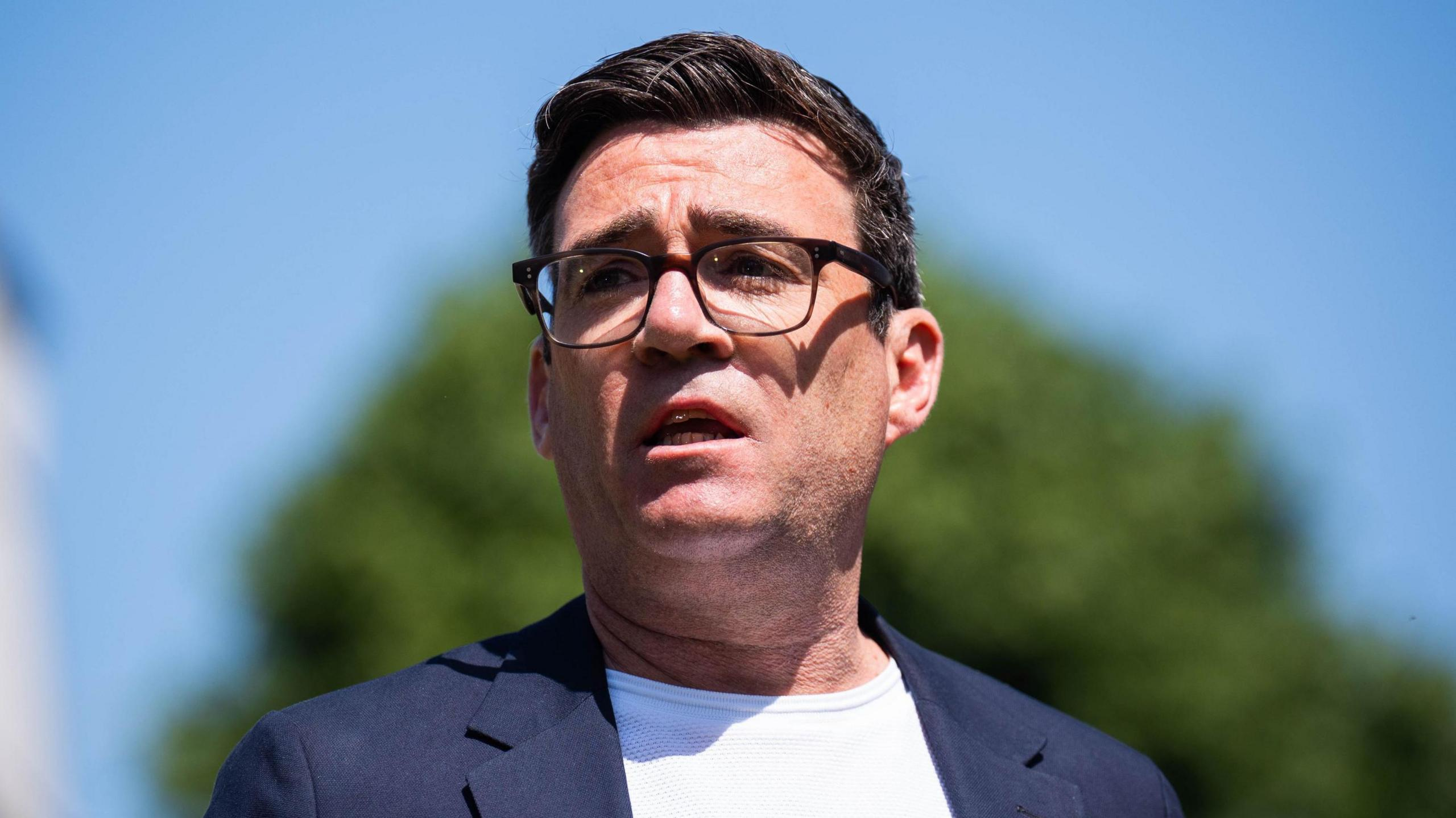
Andy Burnham has been sworn in as the new Labour MP for Makerfield, completing his return to Westminster just hours after Keir Starmer announced he would step down as Labour Party leader and prime minister.
The moment was greeted with loud cheers from Labour MPs in the House of Commons, underlining the speed at which the party’s centre of gravity has shifted. Burnham, the former Greater Manchester mayor and former cabinet minister, is now widely seen as the frontrunner to succeed Starmer and could enter Downing Street within weeks if no serious leadership challenge emerges.
His arrival in the Commons followed a dramatic day in British politics. Starmer used an emotional resignation statement to confirm that he no longer believed he was the right person to lead Labour into the next general election. His decision opened the way for a leadership transition inside the governing party, with Burnham already positioned as the leading candidate.
The political mood around Westminster changed almost immediately. What might have become a divisive leadership contest began to look more like a rapid handover, especially after Wes Streeting, a possible rival, publicly backed Burnham instead of running against him.
For Labour, Burnham’s swearing-in was more than a parliamentary formality. It marked the beginning of a new phase for the party and possibly for the country.
Starmer Resigns After Mounting Labour Pressure
Keir Starmer’s resignation comes after months of pressure inside Labour and a sharp deterioration in the party’s political position. Although Starmer led Labour to a major general election victory, his authority weakened after poor election results, internal criticism and growing doubts among MPs about whether he could lead the party successfully into the next national contest.
In his resignation statement, Starmer said he had listened to the concerns of Labour MPs and accepted that the party wanted a different leader for the next phase. He defended his record in government but acknowledged the political reality facing his leadership.
The resignation is significant because Labour remains in government. That means the next Labour leader is expected to become prime minister without an immediate general election, provided they can command the confidence of the House of Commons.
That constitutional reality is already becoming a major political argument. Opposition parties are likely to claim that a new prime minister would lack a direct public mandate. Labour will argue that the party won the general election and has the parliamentary majority to continue governing.
Burnham’s Commons Return Draws Loud Labour Cheers
Burnham’s formal swearing-in as MP for Makerfield drew a highly visible reaction from Labour MPs. He entered the chamber to loud cheers from the Labour benches, reflecting the scale of support gathering around his leadership bid.
He took the oath after other newly elected MPs and then made his way through the chamber, acknowledging MPs as he passed. The scene was unusually charged for a by-election winner, because Burnham’s return to Parliament is closely linked to the race for No 10.
Normally, a new MP’s swearing-in is a routine parliamentary moment. In this case, it felt like a leadership launch in all but name. Senior Labour figures watched closely, and many MPs treated Burnham’s arrival as the start of a new political chapter.
The symbolism was clear. Burnham was no longer outside Westminster looking in. He was back in the Commons, eligible to lead the Parliamentary Labour Party and positioned to become prime minister if the leadership process breaks his way.
Why Makerfield Matters
Burnham’s victory in the Makerfield by-election was the event that made his leadership bid possible. Without a Commons seat, he could not credibly take over as Labour leader and prime minister.
Makerfield gave him a direct route back to national politics after years as Greater Manchester mayor. It also provided Labour MPs with evidence that Burnham could still win votes in a difficult political climate.
The by-election result mattered beyond one constituency. Labour has been facing pressure from opposition parties, especially Reform UK, which has been targeting disillusioned voters in working-class and post-industrial areas. Burnham’s win offered Labour MPs a sign that the party could still defend key seats if it changed tone and direction.
That is why the result strengthened Burnham’s position so quickly. It was not only a personal victory. It became a political signal to Labour MPs searching for a way to recover momentum.
Wes Streeting Backs Burnham
Wes Streeting’s decision to back Burnham may prove decisive. Streeting had been viewed as a possible leadership contender, but his endorsement of Burnham reduced the chances of a serious contest.
In his statement, Streeting praised Starmer for leading Labour back into government but said the party now needed change. He argued that Burnham had shown Labour could be inclusive, united and connected to the people it was created to represent.
Streeting’s support matters because he is a senior Labour figure with his own base of support. By choosing not to run, he helped clear the path for Burnham and signalled to other MPs that the party should avoid a long internal fight.
His message was also strategic. Labour could spend the summer arguing over internal differences, or it could rally around one candidate and move quickly toward a new government agenda. Streeting chose the second option.
That endorsement has made Burnham’s path to the leadership much smoother.
Could Burnham Enter No 10 Within Weeks?
Burnham could become prime minister within weeks if he secures enough support and no other candidate forces a full leadership contest.
Under Labour’s leadership process, nominations are expected to open in July. If only one candidate reaches the required threshold, that person can become leader without a membership ballot. If more than one candidate qualifies, the process could take longer and continue through the summer.
This is why Westminster is now watching whether any senior Labour figure decides to challenge Burnham. A contest would give party members a say and allow rivals to test Burnham’s policies. But it could also extend uncertainty at a time when Labour wants to project stability.
A coronation would be faster. It would allow Labour to install a new leader and prime minister before the political damage deepens. But it would also give opposition parties an easy attack line: that Britain would be getting a new prime minister without a general election.
That debate is likely to dominate the next phase of British politics.
Labour MPs Move Quickly Behind Burnham
The speed of support for Burnham suggests many Labour MPs want to avoid a prolonged leadership battle. After Starmer’s resignation, the mood among MPs appeared focused less on the outgoing prime minister’s legacy and more on what comes next.
Senior figures from Starmer’s government were seen gathering around Burnham, a sign that parts of the existing Labour machine may be ready to work with the likely new leader. That matters because Burnham will need more than popularity to govern. He will need the support of ministers, MPs, advisers and party officials.
The early show of unity is also designed to calm markets, voters and international partners. Leadership changes can create uncertainty, especially when the governing party remains in office. Labour’s immediate priority is to make the transition look orderly rather than chaotic.
Burnham’s challenge will be to turn that early enthusiasm into a functioning government.
What Burnham Represents Politically
Burnham has long presented himself as a Labour politician rooted in place, public service and regional identity. As mayor of Greater Manchester, he built a public profile around transport, housing, devolution, public services and a more direct style of communication.
That profile helped him stand apart from Westminster politics. Many Labour MPs now see that as an advantage. They believe Burnham may be better placed than Starmer to reconnect with voters who feel ignored by national politicians.
His supporters argue that he can speak to both Labour’s traditional base and newer voters who want practical change on living costs, public services and local power. His critics will ask whether his mayoral record can translate into national leadership, especially on foreign policy, fiscal policy and defence.
That is the next test. Burnham has a strong political brand, but he will now need a detailed national programme.
The Mandate Question
Opposition parties are expected to argue that Burnham should call a general election if he becomes prime minister. Their case is straightforward: voters elected a Labour government led by Keir Starmer, not Andy Burnham.
Labour’s response will be that the UK is a parliamentary democracy. Voters elect MPs, and the prime minister is the person able to command a majority in the House of Commons. Since Labour holds that majority, a change of party leader does not automatically require a general election.
This argument has appeared before in British politics. Prime ministers can change between general elections if their party remains in government. The political question is not whether it is constitutionally possible. It is whether voters accept it as legitimate.
Burnham will need to move quickly to establish authority. That may mean setting out clear priorities, reshuffling the cabinet, making early policy announcements and showing that the government remains stable.
What Happens to Starmer’s Legacy?
Starmer leaves after a difficult and shortened period in office. His allies will argue that he rescued Labour from opposition, restored credibility and delivered a general election victory that once looked unlikely.
His critics will say he failed to maintain public trust after entering government and struggled to define a compelling national mission. Poor election results, internal frustrations and voter dissatisfaction weakened his position until resignation became unavoidable.
The truth may be more complicated. Starmer’s achievement was to make Labour electable again. His failure was that many Labour MPs concluded he could not keep the coalition together long enough to win the next election.
That tension will shape how his leadership is remembered. He may be seen as the leader who brought Labour back to power but could not survive the demands of governing.
Challenges Facing Burnham
If Burnham becomes prime minister, he will inherit a difficult political and economic landscape. Labour faces pressure on public services, housing, living costs, economic growth, immigration, energy security and trust in government.
He will also face a rising challenge from opposition parties seeking to present Labour as divided and exhausted. Reform UK is likely to attack him on mandate and immigration. Conservatives will try to argue that Labour has collapsed into internal turmoil. The SNP and other parties will look for openings in Scotland, Wales and across regional politics.
Burnham’s first task will be to define what changes under his leadership. If voters see only a new face with the same problems, the political reset may not last. If he can show a clearer agenda, he may give Labour a chance to recover.
The Road to Downing Street
Burnham’s route to Downing Street now depends on the Labour leadership process. If no major rival emerges, he could become leader quickly and be invited to form a government as prime minister. If there is a contest, the timetable could extend through the summer.
Either way, the direction of travel is clear. Burnham has returned to Parliament at the exact moment Labour is searching for a new leader. He has secured early backing from major figures. He has momentum among MPs. And he has a by-election victory that strengthens his claim to be a vote-winner.
The coming days will determine whether that momentum becomes unstoppable.
Conclusion
Andy Burnham’s swearing-in as MP for Makerfield has become one of the defining moments of a dramatic Labour transition. What would normally be a routine parliamentary ceremony instead looked like the opening scene of a possible premiership.
Keir Starmer’s resignation has left Labour facing a choice between a quick handover and a full leadership contest. Wes Streeting’s decision to back Burnham has pushed the party closer to a rapid transition, raising the possibility that Burnham could enter No 10 within weeks.
For Labour, the immediate goal is stability. For Burnham, the challenge is bigger. He must prove that his appeal outside Westminster can become authority inside government. He must show that he can unite Labour, answer the mandate question and offer voters a clearer sense of national direction.
The leadership race may still produce surprises. But after Burnham’s Commons return, the message from much of the Labour Party was unmistakable: the post-Starmer era has already begun.
Read Also: Kenya’s Oncology Workforce in 2026