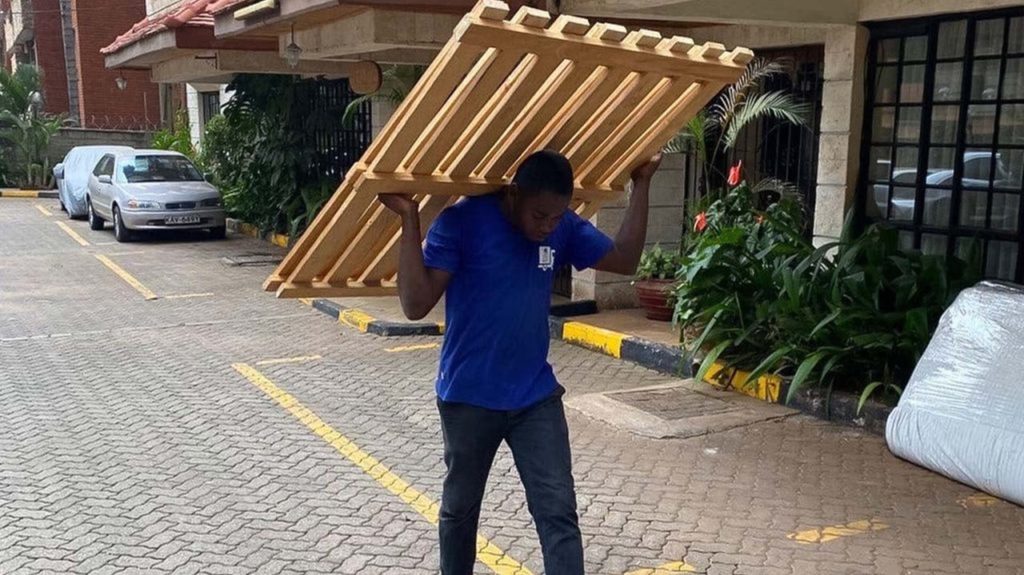
A move within Kilimani can involve a short drive and a complicated loading process. Floor levels, lift access, parking and furniture dimensions can affect the work as much as the distance between buildings. The useful preparation begins before you compare prices.
When contacting movers in Kilimani, give the exact collection and delivery buildings, the entrances and the items involved. A message saying “two bedrooms near Yaya” leaves too many practical questions unanswered.
Space Move’s Kilimani service information identifies local roads including Argwings Kodhek Road, Kindaruma Road, Lenana Road and Wood Avenue. It also places its office on Othaya Road in neighbouring Kileleshwa. Customers should distinguish the area a company serves from the location of its office.
Get the building information before accepting a schedule
Ask the manager or caretaker at both properties how moving access is handled. Find out whether there are permitted hours, a lift booking, a loading location or a gate-clearance procedure.
Record who gave the information and the date it applies. If there is a written approval or confirmed reservation, share the relevant details with the mover. Do not assume that a conversation at the old building covers access at the new one.
Building requirements vary. There is no reason to assume that every Kilimani apartment block has the same moving hours or charges the same deposit. Confirm the arrangements for your actual properties rather than relying on a neighbourhood-wide rule.
If a deposit or other building charge applies, establish who pays it, who issues the receipt and how any refund is handled. Keep those arrangements separate from the moving company’s own charges.
Share the service entrance with the moving crew
For an apartment near Yaya Centre or along Argwings Kodhek Road, give the crew the pin for the actual loading entrance. Ask building management which access point the truck must use and whether reception needs the vehicle registration, the crew names or a gate pass. If the assigned loading bay is in a basement, ask for the height limit and pass it to the mover before the vehicle is assigned.
Walk the complete route to the truck
The useful access route begins inside the home. Follow it through the doorway, corridor, stairs or lift and out to the likely loading point.
Identify the difficult turns. A large sofa can fit through the front door and still encounter a problem at a staircase landing. A tall wardrobe may need dismantling even when smaller furniture can use the lift.
Measure awkward items and the narrowest relevant openings, then share the measurements with the mover. Ask the crew to assess feasibility before deciding how an item should be handled. Do not treat a visual estimate as confirmation that it will fit.
Check the outside route too. If the truck cannot approach the entrance, the carrying distance should be included in the assessment. Share photographs where the loading position is not obvious from a map pin.
Prepare a quote request that answers the main questions
You can adapt the following brief before sending it to a provider. It is a planning template, not a confirmed booking.
- Collection building and entrance, with a map pin and contact person.
- Delivery building and entrance, with a map pin and contact person.
- Preferred date and the approved access window at each end.
- Floor levels, lift availability and the alternative if the lift is unavailable.
- Major furniture and appliances, estimated boxes and any special items.
- Packing, dismantling, reassembly and unpacking required.
- Truck parking or loading restrictions and the carrying route.
Tell the mover if any detail remains uncertain. An assumption can then be recorded in the quote rather than discovered on the day.
Check furniture against the lift and stairs
Ask your apartment movers in Kilimani to check the usable width of the service-lift doors, the cabin depth and any tight turn between the lift and the front door. Share the widest dimension of a sofa or wardrobe and note whether its legs or doors can be removed. If you are moving between Kilimani and Kileleshwa, confirm the lift slots independently at each building and allow time between them for loading and travel.
Compare the total job rather than the route
A provider needs more than the number of bedrooms to estimate the work. Inventory, packing and access determine the labour and handling involved.
Consider two hypothetical moves between the same roads. One household has prepared boxes, a booked service lift and a loading point beside the entrance. The other needs full packing, has furniture that requires dismantling and must use a staircase.
These are illustrative scenarios, not local price estimates. They show why the same route can produce different quotations without either company necessarily charging unfairly.
Ask each provider to quote against the same brief. If one includes packing materials and furniture assembly while another includes transport only, resolve the difference before comparing the totals.
Agree who handles the appliances and furniture
List items that need disconnection, dismantling or reassembly. Confirm whether the mover performs each task and whether any specialist work needs a separate technician.
For appliances, follow the manufacturer’s preparation instructions and ask for competent help where required. Do not assume that moving labour includes electrical, plumbing or gas work.
Photograph furniture before dismantling and keep small fittings identified with the relevant item. Agree who keeps those fittings during transport and who checks that reassembly is complete at the destination.
For fragile belongings, specify what needs professional packing. A box labelled “fragile” does not establish how its contents were packed or what handling has been agreed.
Plan for a missed access window
Ask how the provider would handle a delayed handover or an unavailable lift. The practical question is whether loading, delivery or temporary holding can still proceed, and at what additional cost.
Do not assume that stairs are an automatic alternative. The mover needs to assess the route and the items before agreeing to that change.
If temporary storage may be necessary, discuss it before collection. Confirm where the goods would go, how they would be recorded and what would trigger final delivery. A contingency is most useful when the decision maker and contact numbers are already agreed.
Keep the receiving property ready
Have the keys and permission to occupy the destination before committing to delivery. Clear the rooms and decide where large furniture should go. Someone authorised to make placement decisions should be present or readily contactable.
Set aside anything travelling with you, including important documents and first-night essentials. Label the other boxes by destination room so the crew can place them without opening each one.
For a Kilimani office move, use department or workstation identifiers and coordinate equipment reconnection with the IT team. Moving a computer to the correct room does not complete its technical setup.
Finish with a documented handover
Check the inventory and agreed furniture work before the crew leaves. Record any missing item, damage concern or unfinished task with photographs and a clear description. Follow the provider’s written reporting procedure and applicable deadlines.
Keep the accepted quotation, payment records and the coordinator’s contact details together. If something changes during the move, ask for the revised arrangement to be recorded.
A well-prepared Kilimani move gives the provider enough information to plan the work and gives the customer a clear basis for checking it. Start with the two buildings and the inventory, then agree the price and schedule around those facts.