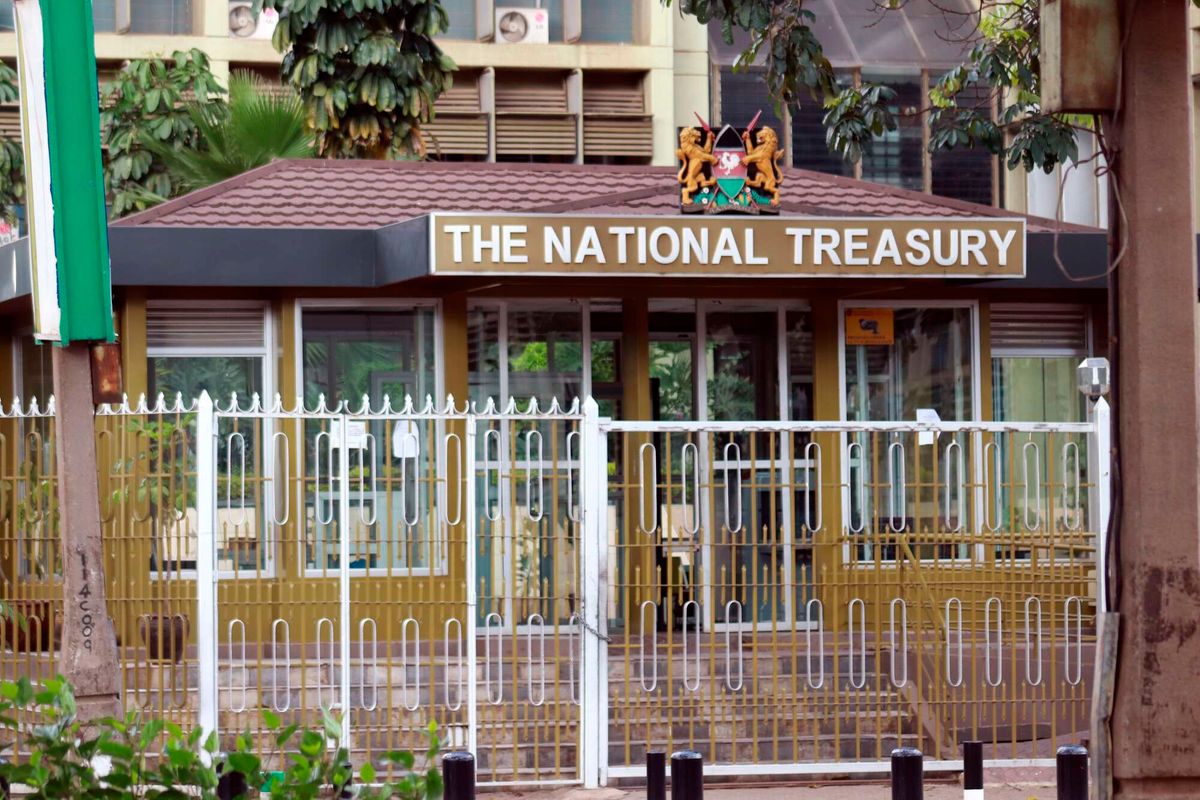
New Kenya climate fund rules are set to reshape how private companies access billions in global climate financing, introducing stricter oversight and longer approval timelines. The updated framework from the National Treasury signals a decisive shift toward tighter State control over climate-linked investments.
The guidelines govern access to the Green Climate Fund, a multibillion-dollar facility that supports developing countries in reducing emissions and adapting to climate change. With global resources estimated at about $20 billion, the fund represents a critical financing channel for both public and private sector projects.
Under the revised structure, all proposals must pass through a centralized approval system before reaching the fund. This process applies equally to government-backed initiatives and private sector projects. As a result, the Kenya climate fund rules introduce a more controlled and coordinated approach to climate financing.
At the core of the framework is a mandatory No Objection Letter, issued by the National Treasury. Without this clearance, no project can proceed for consideration. This requirement effectively places the government at the center of all funding decisions, reinforcing a country-driven approach to climate investment.
The approval process now follows a structured, multi-stage pipeline. Applicants must first submit a concept note, which then undergoes technical review. After that, an inter-ministerial committee evaluates the proposal before granting approval or requesting revisions. Consequently, timelines for securing funding are expected to lengthen significantly.
These changes come as Kenya strengthens its position within the global climate finance ecosystem. Nairobi has recently been designated as a regional hub for the Green Climate Fund’s operations in eastern and southern Africa. This development reflects growing recognition of Kenya’s role in climate investment and policy coordination.
However, the Kenya climate fund rules also raise the bar for private sector participation. Companies must now demonstrate clear alignment with national priorities, including Vision 2030, the National Climate Change Action Plan, and Kenya’s Nationally Determined Contributions. This requirement ensures that projects contribute directly to the country’s strategic goals.
In addition, foreign firms face stricter conditions. They must prove that their projects deliver value beyond what local institutions can achieve. The guidelines also require partnerships with domestic Direct Access Entities, strengthening local capacity and ensuring that benefits remain within the country.
The framework introduces further limitations for multi-country projects. Kenya will generally participate in initiatives involving no more than seven countries, unless a proposal demonstrates significant value for the local economy. This condition reflects a broader emphasis on targeted, high-impact investments.
For private developers, the implications are substantial. Sectors such as renewable energy, carbon markets, and climate-smart agriculture often depend on fast-moving funding cycles. The extended approval timelines could create friction between global investor expectations and domestic regulatory processes.
Moreover, the Kenya climate fund rules impose stricter due diligence requirements. Applicants must provide detailed proof of co-financing, assess potential debt implications, and ensure that projects do not duplicate existing initiatives. While these measures enhance accountability, they also increase the complexity of project preparation.
The Treasury has outlined a one-month review window for committee decisions. However, projects that fail to meet requirements can be rejected outright. In such cases, applicants receive two months to revise and resubmit their proposals, effectively restarting the process.
This stricter approach reflects growing concerns about efficiency and transparency in climate finance. By tightening oversight, authorities aim to ensure that funds deliver measurable impact and align with national development priorities. At the same time, the framework seeks to prevent misuse and improve coordination across sectors.
Despite the challenges, the Kenya climate fund rules could strengthen the long-term credibility of climate investments. Clearer guidelines and stronger governance may attract more sustainable financing over time, even if initial access becomes more demanding.
The broader message is clear. Climate finance is becoming more strategic, more regulated, and more closely tied to national objectives. For private companies, success will depend on their ability to navigate these requirements while aligning projects with policy priorities.
As global demand for climate funding continues to rise, Kenya’s approach highlights a balancing act between accessibility and accountability. The outcome will shape not only the pace of green investment but also the country’s role in the evolving climate finance landscape.