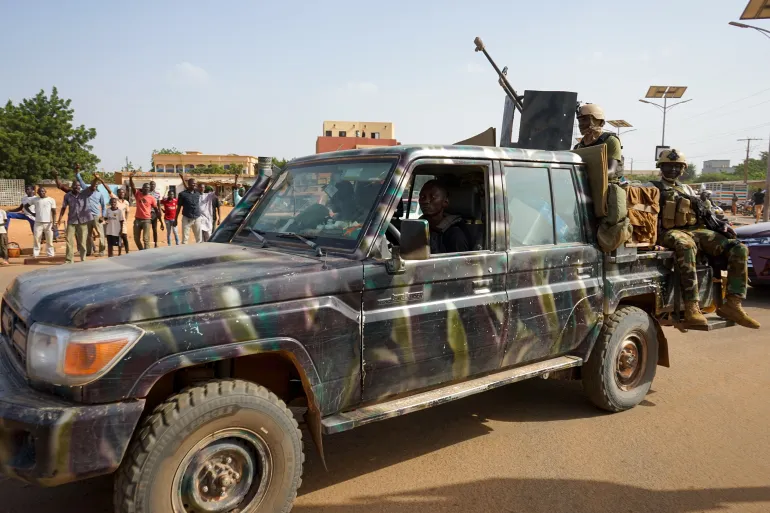
On January 28, 2026, militants from the Islamic State of Iraq and the Levant (ISIL) launched a surprise attack on Niger’s Diori Hamani International Airport in the capital, Niamey. The assault, which targeted a critical hub used by both civilians and the military, was repelled with the help of Russian forces. Moscow confirmed its involvement in the defense of the airport, highlighting a growing role for Russian military support in the region.
Details of the Attack: A Bold and Coordinated Assault
The ISIL attackers stormed the airport compound at night, setting fire to one of the planes and firing upon soldiers stationed there. The assailants, who numbered in the dozens, used assault rifles and motorcycles to carry out their attack. According to reports, the attackers set a plane ablaze before fleeing the scene. A video released by ISIL-affiliated Amaq News Agency showed the militants in action, indicating a well-coordinated effort.
The scale and sophistication of the attack raised concerns that the assailants may have received assistance from inside sources. Ulf Laessing, an expert on the Sahel region, noted that the precision of the attack suggested possible insider involvement or the use of drones, though there has been no formal confirmation.
Russian Assistance: A Joint Effort to Repel the Attack
The Russian Ministry of Foreign Affairs confirmed that Russian forces, part of the Ministry of Defence’s African Corps, assisted Nigerien military personnel in repelling the assault. Moscow strongly condemned the attack and reiterated its commitment to supporting African nations in their fight against terrorism. The Russian Foreign Ministry’s statement emphasized the role of Russian forces in strengthening regional stability and combating extremist threats.
Niger’s military authorities expressed their gratitude for the timely support, with the country’s military chief, Abdourahamane Tchiani, visiting the Russian military base in Niamey to personally thank the Russian soldiers for their professionalism in defending the airport. The swift action from both Russian and Nigerien forces played a critical role in minimizing the damage and repelling the attackers.
Allegations of External Involvement: Tensions Rise in the Sahel
Following the attack, Niger’s military authorities accused several foreign nations, including France, Benin, and Ivory Coast, of supporting the ISIL militants. These accusations were not substantiated with evidence but further fueled tensions between Niger and its former colonial power, France. The Nigerien military initially claimed that the attack was sponsored by external forces, though these allegations were quickly denied by the accused countries. Ivory Coast and Benin both dismissed the claims as “not credible,” and France has yet to issue an official statement on the matter.
The accusation highlights the complex geopolitical dynamics in the Sahel, where regional powers are aligning with different external actors. France, which had a significant military presence in Niger until 2023, has faced increasing resistance from the military junta that took control of Niger after the coup. In contrast, Russia has increased its military presence in the region, offering support to countries like Mali and Niger as part of its growing influence across Africa.
Russia’s Growing Military Presence in Africa
Russia’s involvement in the Sahel is part of its broader strategy to increase its influence in Africa, especially as Western countries have reduced their military engagements on the continent. Over the past several years, Russian military instructors and mercenaries, primarily through the Wagner Group, have been deployed in various African nations, including Mali, Burkina Faso, and the Central African Republic.
Moscow’s African Corps has replaced Wagner in many parts of the continent, providing military training, technical support, and direct assistance to local forces fighting terrorist groups. While Russia’s presence in Africa is framed as an effort to combat extremism, it is also part of a broader effort to expand political and military influence in the region. Many African governments have welcomed Russian support, seeing it as a counterbalance to the influence of former colonial powers and the West.
The Sahel’s Ongoing Struggle with Extremism
The Sahel remains one of the most unstable regions in the world, plagued by insurgencies linked to groups like Al-Qaeda and ISIL. The region has become a battleground where local governments struggle to maintain control while terrorist groups gain strength and territory. For over a decade, Niger, Mali, and Burkina Faso have fought against extremist groups, with limited success.
The recent attack on the Niamey airport demonstrates the escalating threat posed by these groups. As extremism spreads, the need for international support has never been more critical. Russia’s involvement, alongside other foreign military partnerships, highlights the increasing militarization of the region as countries seek external help to combat the growing insurgency.
Regional and Global Reactions to the Attack
The attack on Niger’s airport has drawn international attention to the ongoing conflict in the Sahel. As Niger’s military continues to fight against ISIL and other extremist groups, the involvement of external actors like Russia has sparked debate. While Russia’s support is welcomed by some governments in the region, it raises concerns for others who fear an overreliance on foreign military forces.
The attack also underscores the vulnerability of key infrastructure in the region. Airports and military bases have become prime targets for insurgent groups, which are increasingly using sophisticated tactics and technology to carry out their operations. The international community, including the United Nations and regional bodies, has called for greater cooperation in addressing the security crisis in the Sahel.
Niger’s Strategic Importance and the Role of External Actors
Niger holds significant strategic importance in the Sahel, serving as a key partner for both Western and non-Western powers. The country is home to important military bases, which have hosted French, American, and now Russian forces. These foreign partnerships are crucial for combating terrorism in the region but also complicate the geopolitical landscape.
As the situation in Niger continues to evolve, the role of external actors, particularly Russia, will likely become more pronounced. The shifting alliances in the Sahel may alter the region’s security dynamics, as countries like Mali, Niger, and Burkina Faso seek new military partnerships in response to growing extremism.
The Sahel’s Ongoing Battle Against Extremism
The attack on Niamey airport highlights the intense and growing threat posed by extremist groups in the Sahel. With the involvement of Russian forces in the defense of Niger, the geopolitical landscape in the region continues to shift. While Russia’s growing influence in Africa offers support to local governments, it also raises questions about the long-term implications for regional security and stability.
As the Sahel faces mounting challenges from terrorism, the international community must find new ways to cooperate and provide support to countries like Niger. The fight against extremism is far from over, and the role of external powers like Russia and Western nations will continue to shape the future of the region.