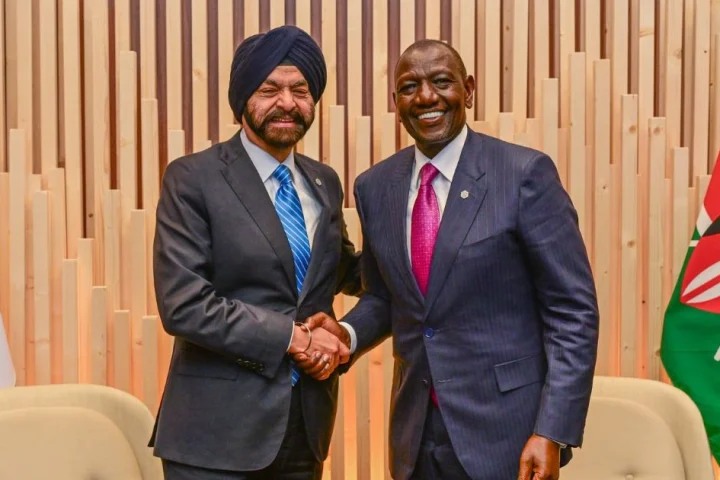
In a strong statement made during a recent church service, Kenyan President William Ruto has called on political leaders to refrain from using places of worship for political purposes, warning against the politicization of churches. His remarks come in the wake of a disturbing incident that occurred during a Sunday service, where former Deputy President Rigathi Gachagua was allegedly targeted. The incident, involving police and armed individuals reportedly throwing tear gas inside and around the church compound, has sparked outrage among church leaders, civil society, and the public at large.
Ruto emphasized the importance of preserving the sanctity of religious spaces, asserting that places of worship must remain free from political conflict and violence. His comments serve as a reminder to the government and all political actors in Kenya about the significance of maintaining peace and unity, especially in spaces that should foster spiritual growth and community cohesion.
The Incident: Tear Gas and Panic During Sunday Worship
The controversy surrounding Ruto’s warning stems from an unsettling event that unfolded during a Sunday church service, which reportedly targeted Rigathi Gachagua, the former Deputy President of Kenya. According to eyewitnesses and local reports, a group of police officers, accompanied by armed personnel, entered the church grounds and began to lob tear gas canisters into the compound. The sudden chaos caused congregants to flee in panic, disrupting the religious service and raising serious concerns about the use of force in such a sacred space.
The incident quickly became a national topic of conversation, drawing condemnation from various quarters, including church leaders and human rights organizations. Religious leaders have expressed their shock and dismay, stressing that this act was not only a violation of religious freedom but also a significant threat to the integrity of worship. Civil society groups have demanded accountability from the authorities, calling for a thorough investigation and immediate action to ensure that those responsible for the disruption are held accountable.
Ruto’s Response: A Warning Against Political Abuse of Churches
In light of the incident, President Ruto made a public declaration, urging all political figures to respect the sanctity of religious gatherings. During the church service, he addressed the issue directly, cautioning his fellow politicians not to misuse churches for political gain. “We should not politicize places of worship or spread hate and divisions in our congregations,” he stated, emphasizing the importance of keeping religious spaces free from political exploitation.
Ruto’s comments also included a direct warning to security forces about their conduct, stressing that they should refrain from engaging in what he described as “unnecessary, useless, and retrogressive politics.” His remarks reflect growing concerns that political conflicts are increasingly spilling over into social and religious spaces, undermining Kenya’s efforts to maintain peace and harmony. The president urged the police and other security agencies to act with respect and dignity, particularly in settings where Kenyans gather to worship and seek spiritual solace.
The Wider Implications: Political Tensions and the Sanctity of Worship
Ruto’s call to keep politics out of religious spaces comes at a time of heightened political tensions in Kenya. The country has seen a surge in protests and public demonstrations in recent years, often fueled by disagreements between the ruling government and opposition parties. These political struggles have increasingly found their way into religious settings, where leaders from various political factions have used churches to deliver speeches or rally supporters.
The disruption of the church service, involving forceful intervention by the police, highlights the increasingly volatile nature of Kenya’s political landscape. Many political analysts and observers believe that the incident at the church serves as a stark reminder of the risks involved in mixing religion and politics, particularly in a country where religious leaders wield significant influence over public opinion.
Ruto’s statement, therefore, serves not only as a condemnation of the specific incident but also as a broader plea for unity and peace in the country. By emphasizing the importance of protecting religious spaces from political interference, he is seeking to prevent further divisions that could destabilize the social fabric of Kenya. The church, a central institution in Kenyan society, must remain a place where all citizens—regardless of their political affiliations—can come together in worship without fear of violence or intimidation.
Opposition Reactions: Calls for Accountability and Nationwide Protests
The incident involving Gachagua has triggered strong reactions from opposition leaders in Kenya, who have expressed their dissatisfaction with the government’s handling of the situation. Many opposition figures have called for the arrest of the individuals responsible for the attack on the church service, demanding accountability for the unnecessary use of force against peaceful worshippers.
Some opposition leaders have threatened to organize nationwide protests if those behind the tear gas attack are not apprehended and brought to justice. These protests are expected to draw large crowds, further escalating the already tense political climate. The potential for widespread demonstrations highlights the deep political divides within the country and the growing frustration among citizens who feel their rights to peaceful assembly and worship are being infringed upon.
The calls for accountability have gained significant traction, with civil society groups and human rights advocates joining in the demand for justice. Many have pointed out that the use of force in a religious setting is not only an attack on individual rights but also an affront to the collective values of peace and unity that the church represents. The outcome of this situation could have lasting implications for the relationship between the Kenyan government, the opposition, and the general public.
The Role of the Church in Kenyan Politics and Society
Kenya’s church communities have long played an influential role in the nation’s political and social life. Religious leaders often serve as moral guides and advocates for justice, and their influence extends beyond the pulpit into the political arena. The church is viewed by many as a neutral space where all Kenyans, regardless of political affiliation, can find common ground and engage in dialogue.
However, as political tensions continue to rise, religious institutions have become increasingly involved in political debates. The church’s role as a platform for political expression has been a subject of contention, with some leaders using their positions to rally support for their preferred political causes. This growing intersection of religion and politics has sparked debate about the appropriate role of the church in public life and the need to preserve its neutrality.
Ruto’s statement on Sunday serves as a reminder that the church’s primary purpose should remain focused on spiritual guidance and unity, rather than being used as a tool for political maneuvering. By calling for the protection of places of worship from political violence, Ruto is advocating for a return to the church’s core mission of fostering peace, reconciliation, and community cohesion.
The Path Forward: Maintaining the Integrity of Worship Spaces
As political tensions continue to simmer in Kenya, Ruto’s call for the protection of religious spaces from political violence takes on greater significance. The recent incident at the church highlights the dangers of mixing religion and politics, especially in a country that has long struggled with political divisions. By urging political leaders to respect the sanctity of worship and urging security forces to avoid politically motivated actions, Ruto is attempting to mitigate the potential for further violence and unrest.
In the days and weeks ahead, the government’s response to the incident will be closely watched, as will the actions of the opposition and civil society groups. The outcome of this crisis could determine the future of political discourse in Kenya and whether the country can maintain a sense of unity in a time of political polarization.