Kenya’s economy is increasingly regional and global. However, the systems that move money across borders often fail to keep pace with this reality. Consequently, the adoption of modern payment infrastructure has become a non-negotiable priority for both policymakers and private enterprises to sustain current growth.
Currently, businesses operating across African markets still encounter frustrating settlement delays and foreign-exchange constraints. These hurdles create high transaction costs. As a result, these costs directly affect how well local firms can compete. Furthermore, as intra-African trade expands, the efficiency of financial systems becomes a defining factor in national economic survival.
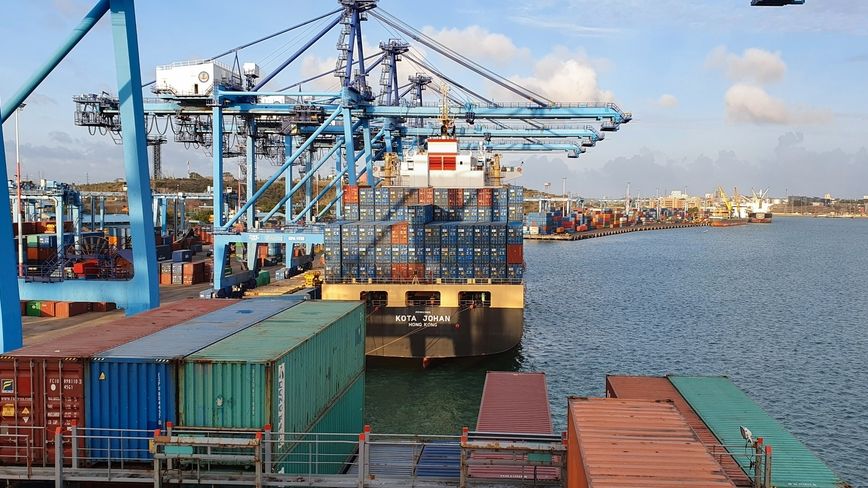
Kenya’s total trade with other African countries reached approximately $5.14 billion in 2024. Specifically, exports totaled about $3.13 billion, according to recent regional trade data. These figures prove how central regional commerce has become to Kenya’s economic trajectory. Nevertheless, the physical movement of money remains a significant hurdle for many.
The nation remains a major net exporter within the region. For instance, Uganda, Tanzania, and Rwanda collectively absorb more than half of Kenya’s African exports. Across sectors like manufacturing and logistics, firms handle large transaction volumes daily. Despite their success, they must operate within fragmented financial systems that often lack coordination.
Additionally, these businesses face limited foreign-exchange liquidity and complex compliance requirements. Such barriers inevitably slow down the movement of both goods and capital. Therefore, these realities highlight the urgent need for collaboration between financial institutions, regulators, and technology providers.
By working together, these stakeholders can strengthen the modern payment infrastructure that supports trade. This ensures that Kenyan businesses stay ahead of the curve. Meanwhile, regional momentum is already visible in the data. For example, total East African Community (EAC) trade grew by over 21 percent in recent reporting periods.
Trade specifically within the EAC bloc reached $4.8 billion lately. This represents a consistent year-on-year increase. In particular, agricultural exports, manufactured goods, and rising commodity demand primarily drive this expansion. Ultimately, connecting Africa to the global economy means reducing friction between effort and value.
African businesses already generate immense value internationally. However, they often face long delays when receiving or moving funds. Thus, the main constraint is rarely a lack of talent or demand. Instead, the problem lies within the underlying modern payment infrastructure.
One innovation gaining global attention is stablecoin-based settlement infrastructure. This technology offers a way to bypass traditional banking bottlenecks. When firms implement these within clear regulatory frameworks, digital assets complement existing systems. Consequently, they improve transaction efficiency, transparency, and liquidity across the board.
Fortunately, Kenya is not starting from zero in this space. The country has a long history as a financial technology pioneer. Moreover, the current legal framework already recognizes stablecoins as a defined digital asset. These instruments maintain a stable value relative to reserve assets.
This forward-thinking approach places oversight of approved issuance under the Central Bank of Kenya (CBK). Such a move positions digital settlement instruments within formal financial supervision. Therefore, it ensures that innovation happens within a safe, regulated environment.
Furthermore, Kenyan law empowers regulators to issue detailed rules. These cover cybersecurity standards, liquidity requirements, and custody protocols. These provisions demonstrate a clear policy direction. Essentially, the question is no longer if modern payment infrastructure should exist, but how it should operate safely.
Kenya’s regulatory approach reflects a constructive model. It pairs structured oversight with a genuine openness to innovation. Similarly, stakeholder engagement and public participation processes reinforce this collaborative direction. The banking sector is also engaging more actively with these developments.
For instance, education initiatives led by the Kenya Bankers Association (KBA) are strengthening institutional understanding. These programs help bridge the gap between traditional finance and new-age solutions. Above all, they ensure that adoption pathways remain aligned with global safety standards.
The infrastructure that moves money ultimately determines how efficiently a society functions. Kenya has a unique opportunity to build on its tradition of financial innovation. By supporting systems that allow businesses to transact seamlessly, the country secures its place as a regional powerhouse.
In conclusion, the real milestone for the nation will not be when new technologies arrive. Instead, success happens when this modern payment infrastructure becomes “invisible.” It should quietly and efficiently power a frictionless regional economy. We look toward a future where value flows as freely as ideas.