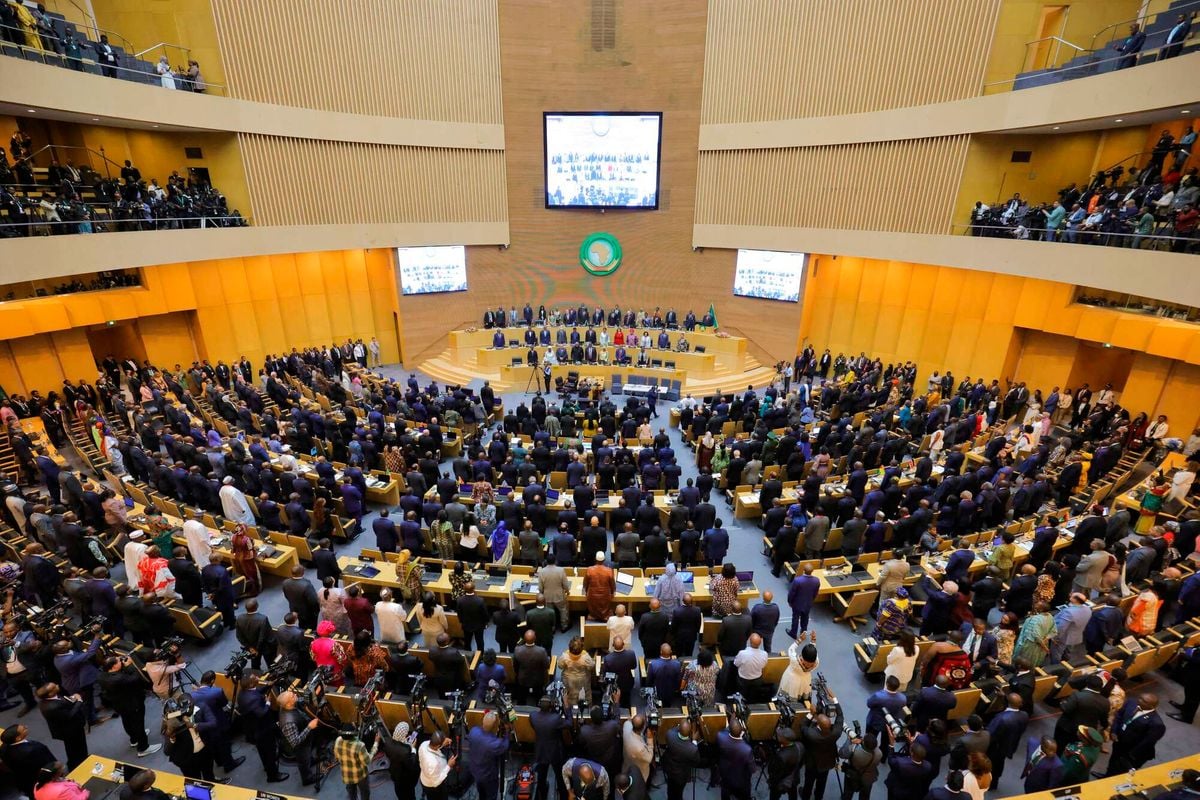
African countries are increasingly turning inward to address a deepening fiscal crisis. With global credit tightening and foreign aid declining, leaders at the 48th African Union Executive Council session in Addis Ababa acknowledged that external financing has become unreliable. As a result, the continent must rely more on domestic resources in Africa to fund development and rebuild critical infrastructure.
Claver Gatete, United Nations Under-Secretary-General and Executive Secretary of the Economic Commission for Africa (ECA), emphasized this shift. “The rules of development are changing,” he told delegates. For decades, African economies followed an external model: export raw materials, import finished goods, and finance growth through concessional loans. “That model no longer works,” he declared. Instead, Africa must anchor its future in its own continental economic system.
This pivot comes amid slowing global growth, trade tensions, supply chain disruptions, and rising borrowing costs. More than 40% of African nations now spend more on debt servicing than on health, according to the UN’s Office of the Special Adviser on Africa. In 2024 alone, Africa’s external debt exceeded $60 billion, while servicing costs reached nearly $90 billion—leaving little for education, healthcare, or infrastructure.
Compounding these challenges are security instability and climate change. Several AU members—including Sudan, Niger, Burkina Faso, and Mali—remain suspended due to coups, creating hotspots for terrorism and conflict. Meanwhile, droughts and water scarcity fuel deadly clashes across the Sahel and Horn of Africa.
AU Commission Chairperson Mahmoud Ali Youssouf admitted progress on integration and trade has stalled. “We have seen regression,” he said, noting that mediation efforts yield slow results. Yet he stressed that solutions must come from within. “We must explore innovative funding sources,” he urged, calling for greater involvement of the African private sector, civil society, and philanthropic foundations.
In response, the AU is reforming institutions to reduce donor dependence. Simultaneously, member states are advancing tax and revenue strategies to mobilize domestic resources in Africa more effectively.
Rwanda offers a leading example. In 2024/2025, the Rwanda Revenue Authority (RRA) collected 101.9% of its target—a 17.4% year-on-year increase. The agency launched a Voluntary Disclosure Scheme and introduced VAT rebates for transparent transactions. It also implemented real-time taxpayer segmentation. The country’s tax-to-GDP ratio rose to 14.3%, up from 14.1%. To enforce compliance, RRA now lists delinquent taxpayers on Credit Reference Bureaus and restricts their access to financial services until they settle arrears.
Botswana is also modernizing its system while keeping tax rates relatively low. The government rolled out real-time VAT billing kits to prevent under-reporting. In 2025, it expanded VAT to remote digital services, aligning with global standards. Additionally, individuals who earn solely through one employer under PAYE no longer need to file returns—a move to simplify compliance.
South Africa faces unique challenges, particularly from illicit trade. Finance Minister Enoch Godongwana revealed that 70% of cigarettes sold are counterfeit, costing the state over $1.69 billion annually. Despite this, the South African Revenue Service (SARS) exceeded projections by September 2025, collecting $58.01 billion in net revenue. The upcoming 2026 Budget, set for February 25, aims to narrow the deficit, stabilize debt, and boost investor confidence through tax administration modernization.
Deloitte analysts note that well-designed incentives in manufacturing, renewable energy, and digital sectors can drive growth without stifling activity. South Africa’s VAT Modernisation Project will soon require e-invoicing and real-time reporting, increasing audit scrutiny. The government also launched a customs Voluntary Disclosure Programme to help importers and exporters correct past errors.
Dispute resolution mechanisms are also evolving. Most objections begin on SARS’s e-Filing platform. If unresolved, taxpayers can pursue Alternative Dispute Resolution (ADR)—a cost-effective mediation process. The independent Office of the Tax Ombud (OTO), established in 2013, handles service complaints and checks administrative overreach, preventing what experts call “bullying” tactics.
As Business Management expert Martin Mokhesi explains, “Taxes often feel like a penalty, not a contribution.” Yet public dissent remains targeted—not wholesale. “Tension exists, but it stays localised,” he said, citing Gauteng residents’ successful refusal to pay e-tolls as an example of surgical civic action.
In conclusion, Africa’s path forward hinges on harnessing domestic resources in Africa with discipline, innovation, and inclusive governance. While external support may wane, internal resilience—fueled by fair taxation, private investment, and institutional reform—offers a sustainable foundation for the continent’s next chapter.
READ: Kenya’s Producer Prices Hit Three-Year Low, Signaling Consumer Relief