Nigeria church kidnappings have escalated after armed gunmen abducted more than 170 people during Sunday services in Kurmin Wali, a village in northern Kaduna state. Among the victims were Afiniki Moses’ husband and two children. Though her children later escaped, her husband remains missing—one of 163 people still unaccounted for, according to the Christian Association of Nigeria.
Moses had only just been released days earlier on January 15 after her family paid a ransom. “They kidnapped a large number of people in the community and my husband happened to be among them,” she said. “As you can see me now, I am not feeling fine.”
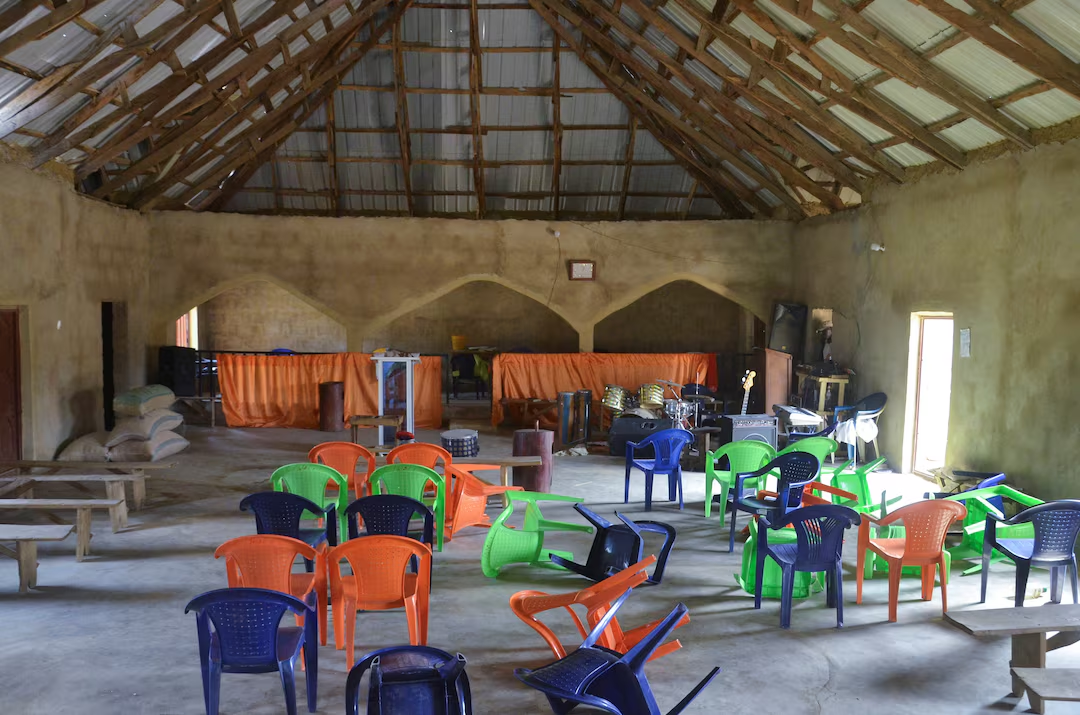
The attack targeted two churches: the Evangelical Church Winning All and the Cherubim & Seraphim Movement Church. Inside the former, a Reuters reporter observed overturned plastic chairs, a Bible left on a seat, and musical instruments abandoned mid-service—signs of a sudden, violent disruption.
Idris Madami was outside the Cherubim & Seraphim church when the gunmen arrived. He fled but lost about 20 relatives, including two wives and three children. “I have not heard from them,” he said.
These abductions are part of a worsening crisis in northern Nigeria, where armed gangs on motorcycles routinely raid remote villages. Their primary motive is ransom, not religion. Yet the repeated targeting of Christian communities has drawn sharp scrutiny from abroad.
U.S. President Donald Trump has placed Nigeria under pressure, citing alleged persecution of Christians. He referenced the issue before authorizing a Christmas Day airstrike—a move the Nigerian government strongly disputes. Officials insist there is no systematic persecution and emphasize that both Muslim and Christian civilians suffer from violence by Islamist insurgents and criminal gangs alike.
In response to international criticism, Nigeria has hired a Washington-based consulting firm to improve its messaging on efforts to protect religious minorities. The government says it is actively combating all armed groups, regardless of their targets.
Still, the frequency and scale of these attacks continue to alarm human rights groups and faith leaders. The Kurmin Wali incident is among the largest single-day mass abductions at a place of worship in recent years. It underscores the fragile security situation in Nigeria’s Middle Belt, where ethnic, religious, and economic tensions often converge.