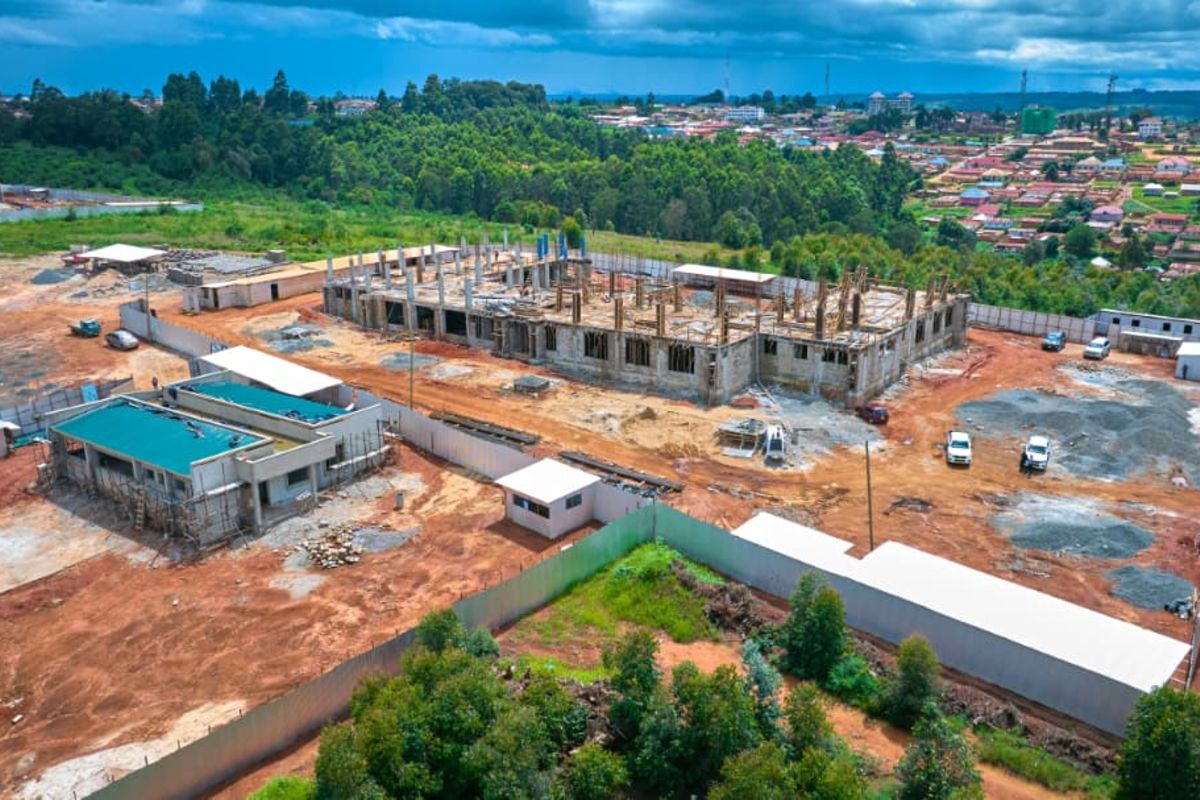
The construction of the UDOM Njombe Campus is already transforming Njombe Region as investors move quickly to position themselves before the university opens. Across Njombe Town, developers are building new commercial properties, hostels, restaurants, and financial service outlets. Consequently, demand for land has increased sharply as businesses prepare for the economic opportunities expected once students begin arriving.
Currently, the University of Dodoma is constructing the UDOM Njombe Campus under Tanzania’s Higher Education for Economic Transformation (HEET) project. The government and the World Bank support this Sh20 billion development initiative. The first phase of the campus is expected to finish by June 2026. Afterward, the university plans to admit its first group of students during the 2026/27 academic year.
As a result, Njombe Town is experiencing a rapid rise in investment activity. New commercial buildings are appearing across the town. These developments will host banks, money transfer agencies, student hostels, restaurants, and retail outlets. At the same time, land prices are climbing as investors compete for strategic locations near the upcoming university.
Regional authorities have responded quickly to this growth. The regional administration has directed councils to survey land and allocate plots for investors. In addition, officials want to ensure that urban expansion follows a proper land use plan. Therefore, planners aim to prevent uncontrolled development that could create long-term infrastructure challenges.
The UDOM Njombe Campus project forms part of a broader government strategy to expand higher education across Tanzania. For many years, universities concentrated mainly in a few major cities. However, policymakers now aim to distribute institutions across different regions. Consequently, areas that previously lacked universities can now benefit from academic institutions and the economic activity they generate.
Experts say this approach represents more than an education reform. Instead, the expansion of universities into new regions acts as a powerful economic intervention. When universities establish campuses, they often trigger growth in housing, retail, hospitality, and transportation sectors. As a result, household incomes increase and employment opportunities expand.
Similar patterns have already emerged in other regions where universities opened new campuses. Local economies grew as small businesses expanded. Moreover, construction projects created jobs for contractors, engineers, and laborers. Retail shops, transport services, and food vendors also benefited from the influx of students and staff.
The UDOM Njombe Campus is expected to create similar opportunities in the Southern Highlands. Njombe Region already plays an important role in Tanzania’s agricultural economy. Together with Iringa, Mbeya, Songwe, and Ruvuma, the region forms a productive agricultural zone. Farmers produce Irish potatoes, tea, timber, and avocados that supply domestic markets and export chains.
Agriculture remains the primary source of income for most households in the region. In fact, it accounts for more than seventy percent of household earnings. Forestry plantations and timber processing industries also employ thousands of workers across the region. Meanwhile, Njombe’s avocado industry continues to expand as farmers access markets in Europe and Asia.
Despite this strong agricultural base, the region still faces challenges related to value addition and technical expertise. Many agricultural products leave the region without processing. Therefore, experts believe the UDOM Njombe Campus could help close this gap by providing technical knowledge, research, and innovation.
Njombe Regional Commissioner Anthony Mtaka recently described the campus as a major economic turning point. According to him, the region is steadily transforming into a new investment destination. He explained that the administration wants to restore Njombe’s reputation as a strong business hub within Tanzania.
At the same time, local authorities are preparing infrastructure to support future growth. The Njombe Town Council has already allocated Sh400 million for the construction of multi-storey hostels and commercial shops. Officials believe early preparation will prevent shortages once the university opens and student demand increases.
Council leaders say they cannot wait until demand overwhelms the town’s infrastructure. Instead, they want to ensure that housing, services, and business facilities are ready before students arrive. Consequently, local government investment complements private sector activity around the UDOM Njombe Campus.
Private investors are also moving quickly to secure opportunities. For example, Dar es Salaam-based hospitality investor John Msuya plans to build a 120-bed hostel near the campus. He has already allocated Sh500 million for the project. According to him, university towns often experience rapid economic transformation.
He pointed to Dodoma as an example of how universities can reshape local economies. However, he believes Njombe holds an even stronger advantage because the region already has a solid agricultural and forestry base. Therefore, the presence of a university could accelerate growth in both agriculture and knowledge-driven industries.
Financial institutions are also expanding operations in the region. Banks expect increased financial activity once the campus opens. Student loans, staff salaries, and small business transactions will likely increase demand for banking services. Consequently, financial institutions are preparing new branches and digital services.
Local agricultural exporters also see opportunities emerging from the UDOM Njombe Campus. One avocado exporter explained that collaboration with university researchers could improve crop productivity. For example, students and scientists could study soil health, plant diseases, and modern farming methods.
Such research partnerships could improve yields and enhance product quality. As a result, farmers may access more competitive export markets. Higher productivity would also increase incomes for agricultural households across the region.
The university campus itself will occupy a 110-acre site. Planned facilities include lecture theatres, modern laboratories, a library, an administration block, a cafeteria, and a health dispensary. During its first intake, the campus is expected to enroll about 1,000 students. However, future expansion could significantly increase that number.
University leadership has also encouraged private sector participation. Vice Chancellor Professor Lughano Kusiluka explained that the institution cannot provide every service students need. Therefore, the university welcomes investors who can build hostels, restaurants, and other essential facilities.
Experience from other university towns shows that students create strong economic demand. Each student needs housing, food, transportation, and daily services. Consequently, even a modest intake of students can generate significant economic activity.
Education analyst Dr Rehema Mhando believes the UDOM Njombe Campus could also reduce youth migration from the region. In the past, many talented students left the Southern Highlands to study in distant cities. Often, they did not return after graduation.
However, the presence of a local university changes that pattern. Students can now study closer to home while contributing to the regional economy. In addition, research institutions help create knowledge-based industries that retain skilled professionals.
Ultimately, the UDOM Njombe Campus represents a powerful combination of education development and regional economic transformation. By bringing higher education closer to rural regions, Tanzania is creating new centers of investment, innovation, and opportunity across the country.