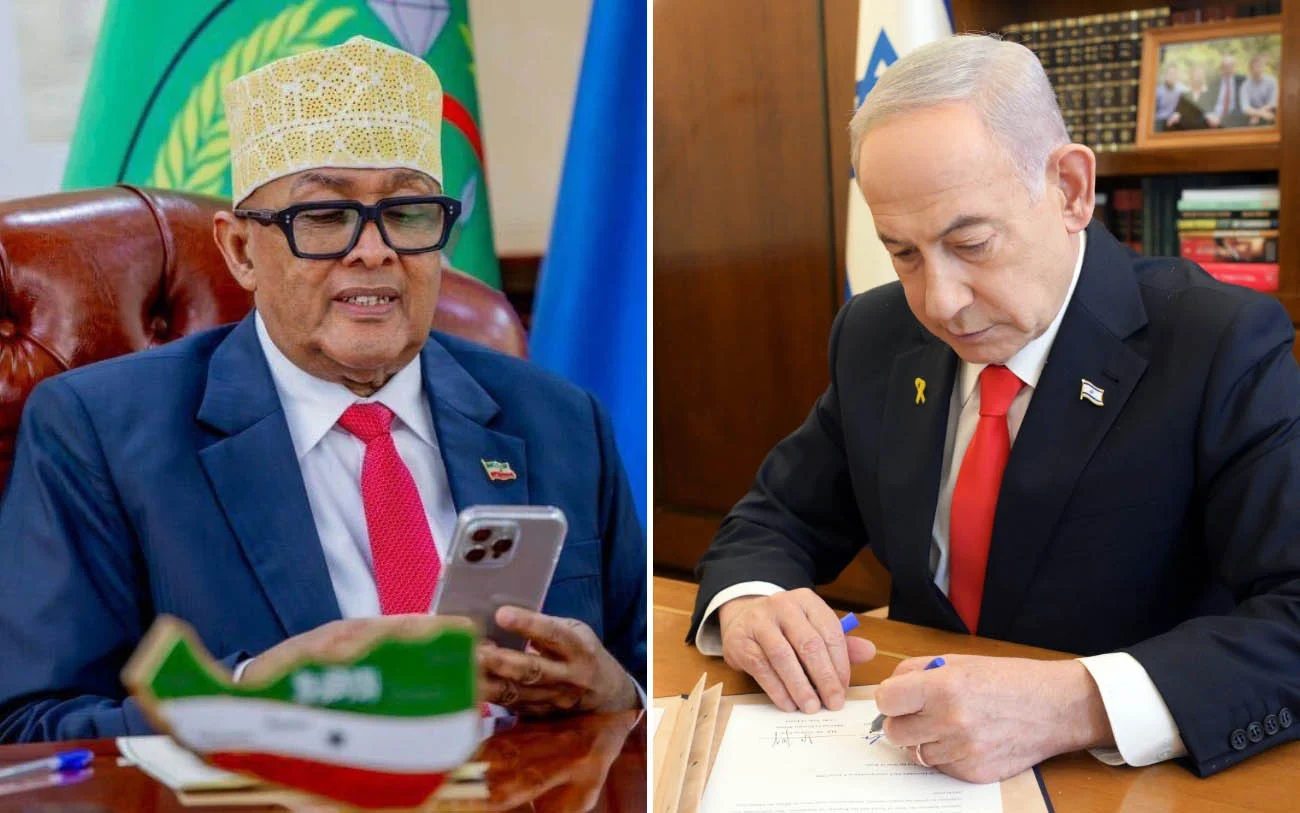
Israel’s Somaliland recognition has opened a new geopolitical chapter in the Horn of Africa, triggering strong reactions across the region. The move, announced by Prime Minister Benjamin Netanyahu in late December, formalised diplomatic ties with Somaliland, a self-declared republic that broke away from Somalia in 1991. While Somaliland has functioned independently for decades, it has lacked international recognition until now.
Also read: Israel becomes first country to recognize breakaway Somaliland as independent state
The decision immediately sparked protests in Somalia and criticism from several regional powers and organisations. Many analysts see the step as part of Israel’s broader foreign policy strategy, shaped by ongoing regional conflicts and shifting global alliances. As a result, Somaliland recognition has become a focal point for debates about sovereignty, security, and influence in one of Africa’s most strategic regions.
Israel formalises Somaliland recognition
Israeli Foreign Minister Gideon Saar’s visit to Hargeisa on January 6 marked the first high-level Israeli trip since diplomatic ties were established. During meetings with Somaliland President Abdirahman Abdullahi Mohamed, Saar defended the decision and dismissed international criticism. He said Israel alone would decide which entities it recognises and maintains relations with.
Netanyahu framed Somaliland recognition as consistent with the spirit of the Abraham Accords. That initiative, led by the United States, encourages diplomatic normalization between Israel and regional partners. However, unlike earlier accords, this recognition directly challenges Somalia’s territorial claims, intensifying diplomatic tensions in the Horn of Africa.
Also read: Somalia Cancels UAE Agreements Over Sovereignty Dispute
Regional backlash and Somalia’s response
Somalia’s federal government strongly condemned the move. Officials argued that Somaliland remains part of Somalia and accused Israel of violating international norms. Several countries and organisations, including Turkiye, Saudi Arabia, and the African Union, echoed these concerns.
Within Somalia, protests followed the announcement. Many citizens view Somaliland recognition as a threat to national unity. For Mogadishu, the issue goes beyond diplomacy. It touches on state survival, federal authority, and long-standing fears of external interference in domestic affairs.
Strategic value of Somaliland
Analysts point to geography as a key factor behind Somaliland recognition. The region sits at the crossroads of the Red Sea and the Indian Ocean, near some of the world’s busiest shipping lanes. Its port city of Berbera lies close to routes that have faced repeated attacks by Yemen’s Houthi movement over the past two years.
Control and access in this corridor carry major security and trade implications. Therefore, an ally in Somaliland offers Israel a strategic foothold near critical maritime chokepoints. Observers argue that this location alone explains much of the interest driving Somaliland recognition.
Broader ambitions behind the move
Some experts believe Israel’s goals extend beyond maritime security. Former Israeli peace negotiator Daniel Levy suggested the move also strengthens Israel’s standing with its key ally, the United States. By positioning itself in a region where global powers compete, Israel increases its strategic value to Washington.
The timing also raised eyebrows. Netanyahu announced Somaliland recognition shortly before meeting US President Donald Trump in late December. Analysts say this may have been designed to demonstrate proactive alignment with perceived US interests in the Horn of Africa, especially as China maintains a military base in neighbouring Djibouti.
Momentum and expanding influence
Critics argue that Somaliland recognition fits into a wider pattern of Israeli foreign policy since the Gaza war began in 2023. They describe an approach driven by expansion and momentum rather than compromise. According to this view, Israel seeks to project strength across multiple theatres, from the Middle East to Africa.
Alon Pinkas, a former Israeli ambassador, said most Israelis know little about Somaliland. He argued that domestic support for deeper involvement in the Horn of Africa remains limited. Even so, he believes the move reflects Netanyahu’s tendency to widen the scope of conflict and influence rather than de-escalate.
Somaliland’s perspective and local support
In Somaliland, the reaction has been largely positive. Many residents celebrated the announcement, hoping it will pave the way for broader international acceptance. For a region that has maintained relative stability, its own currency, and security forces for over 30 years, recognition carries symbolic and practical weight.
Somali journalist and human rights activist Abdalle Mumin said many Somalilanders see Israel’s decision as validation of their governance record. He added that peace and stability in Somaliland contrast sharply with decades of conflict elsewhere in Somalia. As a result, some believe other countries may now follow Israel’s lead.
Implications for the Horn of Africa
Somaliland recognition has added another layer of complexity to an already volatile region. The Horn of Africa hosts competing interests from Gulf states, Western powers, and China. Each new alliance shifts the balance and raises concerns about militarisation and proxy competition.
For Somalia, the move reinforces fears of fragmentation. For Israel, it represents an opportunity to extend influence beyond the Middle East. Whether Somaliland recognition leads to lasting diplomatic change or deeper regional friction will depend on how other states respond in the months ahead.
Israel’s Somaliland recognition signals strategic expansion in the Horn of Africa, sparking regional backlash and debate over influence Somaliland recognition